Apartment lockouts tend to happen in the hallway: the door clicks shut on the way to the trash room, or the keys stay on the kitchen counter while you grab a package downstairs. If the leasing office is open and keeps unit keys, they may be the quickest way back in, so it's worth a try first.
Otherwise, call with the address and the unit, and a technician heads your way. No door gets opened until the technician has seen proof that you live there: a photo ID with the address, or the lease for the unit. Once you're in, the lock is looked at, and a latch that keeps catching or a key that barely turns gets named before it strands you again.
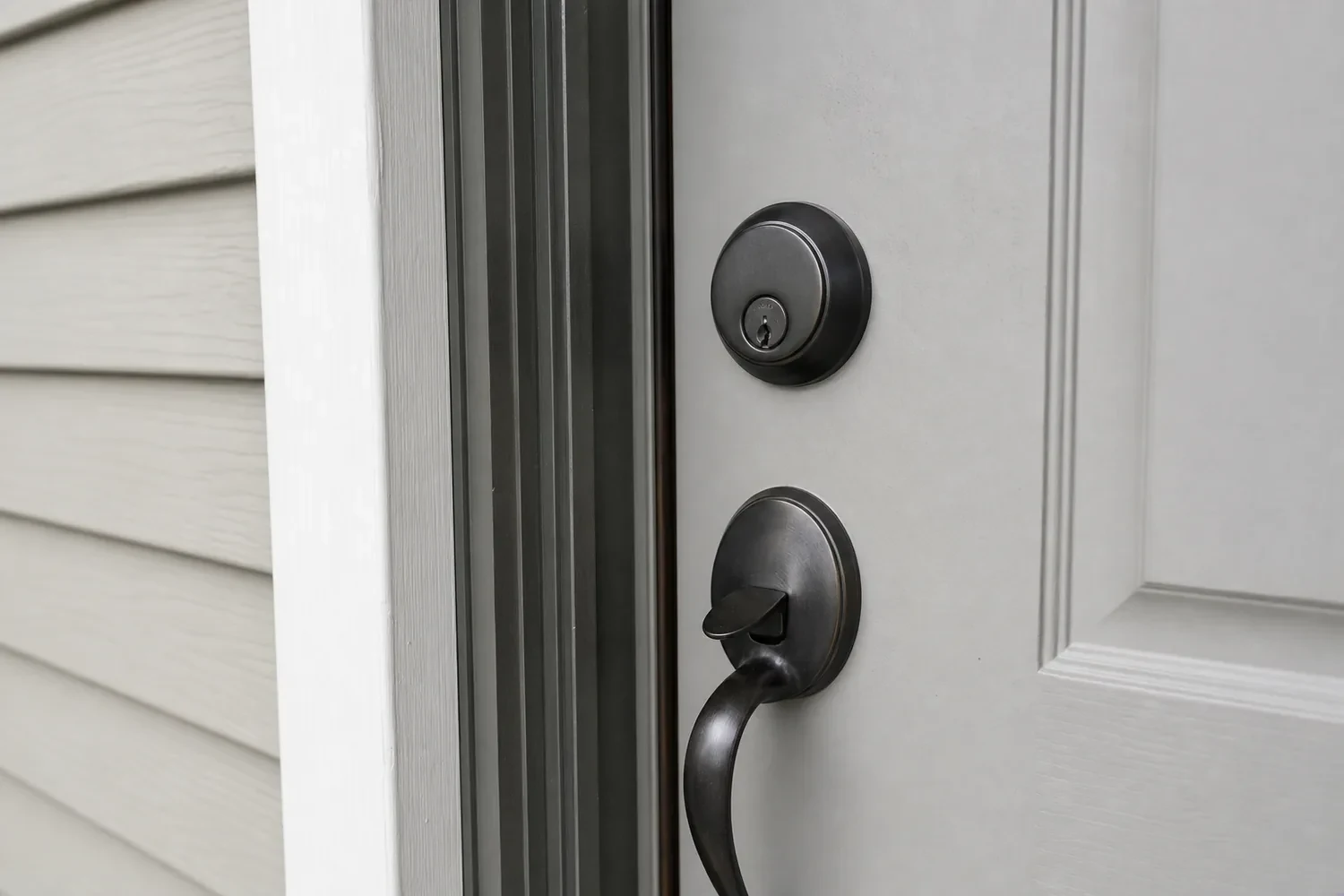
The weak point of most deadbolts isn't the lock; it's the frame the bolt goes into. On many doors the bolt stops short of full travel, or the strike plate is fastened with short screws into soft trim. A heavier strike and screws that bite into the framing make the door hold the way it should.
Doors that lock only with the knob can take a new deadbolt, drilled cleanly and set so the bolt glides home without the door being pushed. In a rental that takes the landlord's OK; in a house it just takes choosing the door. It can be keyed to match the keys you already carry.
Houses and apartments here open onto patios, balconies and, in some mid-century homes, a central atrium, which means a lot of sliding glass doors. Their built-in latches hold the panel closed but do little against someone determined to lift or pry it.
A secondary lock, mounted low on the frame or pinned through both panels, means the panel can no longer be lifted off its track or levered open, and it works from inside without changing the look of the door. Where a solid door sits beside a lot of glass, the technician also looks at whether its lock can be reached through a nearby pane, and suggests hardware that suits that layout.
Whatever the door, the visit runs like this.
Say which one, what is wrong with it, and whether the place is rented or owned.
A photo ID with this address or your lease, shown before work begins.
What the lock needs, laid out plainly; nothing begins until you agree.
Each lock is locked and unlocked with its key in front of you before the technician goes.
Houses built in the fifties and sixties often still carry the locks they were built with: slim locksets, odd backsets, and doors that have been painted around the hardware more than once. Those locks wear out, and parts for some of them have been off the market for decades.
When an old lock can be kept running, it is. When it can't, the technician finds new hardware that fits the existing holes and suits the clean lines of the door, so the replacement doesn't look like an afterthought. You hear the options, and see what the new hardware looks like, before anything comes off the door.
Lever handles are worth a thought at the same time. They are easier for small hands and full arms than round knobs, and many modern sets are made in the slim, plain shapes that suit a mid-century door.
A balcony door a floor or two up still deserves a working lock, especially in buildings where balconies sit close together. A secondary lock on a balcony slider goes in quickly and is invisible from outside.
In houses, the side gate and the door from the garage are the two entrances people forget. A keyed gate lock matched to the house, and a deadbolt on the garage entry door, close the gaps that a garage left open or a gate left unlatched would otherwise create. A gate that has sagged and no longer latches on its own is set back in line while the technician is there.
For apartment doors, small additions go a long way: a door viewer with a wide view of the hall, a chain or swing bar, or an extra deadbolt mounted higher on the door. Each is installed so it truly engages, not just so it's there.
Renters need the landlord's or manager's OK first, and condo owners should look at what the association allows on unit doors. The technician works within whatever the lease or the rules say.
Keys from past residents, movers, agents and cleaners don't stop working when the lease or the deed changes hands. A rekey in the first week, and a keypad on the main door if you'd like codes instead of keys, leaves entry in the hands of the people you pick.
While the technician is there, the small locks are worth a look too: a mailbox key that never quite worked, a storage cage in the garage, a gate to the side yard. In a larger building the mailboxes are management's, so a missing mailbox key is a question for the office.
Yes. You'll be asked for a photo ID with the address or the lease for the unit before anything is opened, which is what stops someone else from talking their way into your place.
If it's open and holds unit keys, that may be the faster route. If the office is closed or has no key, call and a technician is sent.
Yes. A second lock near the bottom of the frame, or a pin set through the overlapping panels, keeps it from being lifted out or pried, and from outside nobody can tell it's there.
Sometimes. When parts are gone, the technician finds new hardware that fits the existing holes and suits the door, and shows you before anything changes.
With the landlord's OK, yes. Door viewers, chains, swing bars and an extra deadbolt are all quick installs, and several can be done in one trip.
Yes. Balcony sliders usually get a secondary lock, and a swinging balcony door can take a proper deadbolt where the frame allows.
It is. A technician sees the door, walks you through what could be done, and you have the free estimate before anything is touched.
Tell us your street and we send a tech.